

The story and its setting
The history of women’s golf in Britain and Ireland is not a short preface to the modern professional tour. It has its own institutions, long-running championships, celebrated rivalries and international teams. Following those connections makes familiar venues more interesting: Lytham belongs to the women’s story as well as the men’s, Wentworth helped establish an international amateur match, and Gleneagles has hosted both the Ryder Cup and the Solheim Cup. This is a selective introduction to the organisers and champions who shaped that landscape, with the distinction between amateur championships, professional tournaments and major status kept clear.
Issette Pearson and the work behind a championship
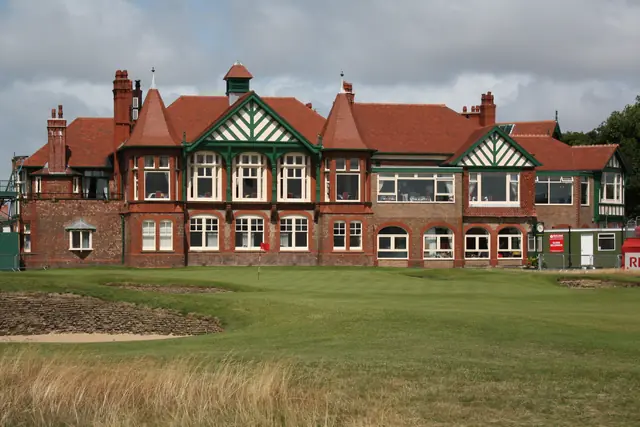
Issette Pearson matters because a game needs more than talented players to develop. The R&A’s account of the first Women’s Amateur Championship identifies her as a founder and secretary of the Ladies’ Golf Union. In 1893, the new championship brought together a field of 38 at Lytham & St Annes. Pearson reached the final, where Lady Margaret Scott defeated her 7&5. She therefore appears in the story both as an administrator and as a serious competitor. Separating those roles would miss the practical achievement: women were creating the organisation through which their own championship could exist.
That first competition should not be imagined as a modern Women’s Open with different clothes. It was an amateur match-play championship, and the Lytham setting was the club’s earlier ladies’ links, rather than a reason to identify every modern championship hole with an 1893 match. The continuing Women’s Amateur Championship has its own history and roll of honour. For readers tracing the origins of women’s competitive golf, it is a better starting point than working backwards from the date when a professional event became a major. The R&A’s championship information records the inaugural field and final.
Lady Margaret Scott sets the early standard
Lady Margaret Scott won each of the first three Women’s Amateur Championships, in 1893, 1894 and 1895. The sequence gave the new competition an immediately recognisable champion. Her third title came at Royal Portrush, taking this formative story across the Irish Sea. The club’s own history records that visit, linking women’s championship golf to Portrush long before the men’s Open first arrived there in 1951. A history built only around the Claret Jug would leave out that earlier international significance.
Scott’s record also helps explain why the amateur championship deserves attention on its own terms. These titles were not qualifying rounds for professional careers: they were the championship itself. Read the early winners as competitors in their own sporting world, rather than as preliminary names before a supposedly more important modern era. The official past-winners list and Royal Portrush’s club history provide complementary routes into this period.
Cecil Leitch and Joyce Wethered
Cecil Leitch and Joyce Wethered show how much sustained excellence the amateur game could contain. Leitch won the Women’s Amateur in 1914, 1920, 1921 and 1926. Wethered’s four titles came in 1922, 1924, 1925 and 1929. Those dates immediately reveal two things that a simple tally conceals: the First World War interrupted the championship, and their periods of success overlapped. They were not isolated champions separated by generations.
Their shared total is more useful than an unsupported claim that one was the greatest player ever. Their championship careers can be followed through an official record, while judgements about style and ability depend on the observer. Visitors can use the venues in that record to connect the rivalry with real links rather than treating it as a list of trophies. The important point is that women were already producing repeated championship winners and substantial sporting rivalries well before the establishment of today’s major calendar. Their achievements should retain the names and status those championships had at the time.
The Curtis Cup creates another stage
The first Curtis Cup was played at Wentworth on 21 May 1932. The United States won 5½–3½ against Great Britain and Ireland. It introduced a different way of following the women’s amateur game: national team selection, partnerships and a match whose significance extended beyond an individual champion. The official match archive makes that starting point precise. It is also a reminder that Wentworth’s importance in golf is wider than the professional PGA Championship.
For a reader familiar with the Solheim Cup, keeping the two events distinct is essential. The Curtis Cup belongs to the amateur game; the Solheim Cup provides the professional women’s transatlantic contest. A player can pass through both parts of that landscape, but the competitions are not interchangeable. The Walker Cup and Curtis Cup history follows the amateur matches, while the Solheim Cup history follows the professional rivalry. Looking at both gives a fuller picture of the pathways through women’s golf.
Laura Davies and a professional generation
Laura Davies connects British golf with an international professional career. Her official career record includes four major victories: the 1987 US Women’s Open, the 1994 and 1996 LPGA Championships, and the 1996 du Maurier Classic. Her 1986 Women’s British Open victory is a different entry in the record because that championship did not become a major until 2001. It remains a championship win; it should not be retrospectively counted as an LPGA major. That distinction prevents a common error when comparing champions from different eras.
Davies also helped give the professional team game its continuity. Her own career record lists twelve Solheim Cups as a player, alongside later appearances as a vice-captain. The point is not merely longevity: the same career stretches across individual championships, tour success and the developing European team. The LPGA’s Hall of Fame announcement describes her major successes, and her official career record separates the different competitions. Use those categories when reading an honours list rather than combining every trophy into a single major total.
Stupples, Matthew and Hall at familiar venues
Karen Stupples won the 2004 Women’s Open at Sunningdale, finishing with a round of 64 and a total of 269. The championship’s official profile records the performance. It places a British champion within the event’s major era and gives Sunningdale a women’s championship reference every bit as concrete as its men’s professional history. A course described simply as a famous heathland venue becomes a setting for an identifiable final-round achievement.
Catriona Matthew’s 2009 victory came at Royal Lytham & St Annes, eleven weeks after the birth of her daughter Sophie. That detail is documented in the championship’s player profile, rather than supplied as a dramatic embellishment. Matthew had already won the Women’s Amateur in 1993. Her career therefore provides a direct connection between the amateur championship’s history and a British major venue. Lytham also hosted Georgia Hall’s 2018 Women’s Open victory, five years after Hall won the Women’s Amateur in 2013. Their different careers show why the amateur results remain relevant to readers following modern champions.
Reading the landscape today
The history continues in the way events are organised as well as in who wins them. The R&A merged with the Ladies’ Golf Union in 2017, bringing a major institutional change to the story that began with Pearson’s generation. That does not erase the LGU’s earlier work. It gives another date at which to pause and ask who ran championships, how the amateur and professional games related, and which opportunities were available to players. The R&A explains the merger in its organisational history.
For a visit, choose the story before choosing the photograph. Royal Portrush connects Scott’s early championships with a modern Open venue. Lytham connects the origins of the Women’s Amateur with the later major wins of Matthew and Hall, while requiring care about the different historical layouts. Sunningdale offers Stupples’ championship setting, and Wentworth adds the first Curtis Cup. Start with the relevant venue guide for practical access, then the AIG Women’s Open visitor hub for attending the current event. A historic association establishes what happened there; it does not guarantee public access to a private clubhouse or permission to walk a course during play.
Sources and useful official links
- Confirmed: The R&A’s championship information
- Confirmed: official past-winners list
- Confirmed: The R&A — Royal Portrush history
- Confirmed: official match archive
- Confirmed: LPGA’s Hall of Fame announcement
- Confirmed: her official career record
- Confirmed: official profile
- Confirmed: player profile
- Confirmed: organisational history
- Confirmed: Official and historical background
- Confirmed: Official and historical background
- Confirmed: Official and historical background
- Confirmed: Official and historical background
- Confirmed: Official and historical background
- Confirmed: Official and historical background
- Confirmed: Official and historical background
- Confirmed: Official and historical background
- Confirmed: The R&A — Royal Portrush history
Useful reading for your visit
Visit today
- Royal Lytham: Open 2028 visitor guide
- AIG Women's Open 2027 at Royal St George's
- Where to stay for The Open 2028: Lytham St Annes and Blackpool
Some links earn us a small commission at no extra cost to you. Affiliate disclosure.