
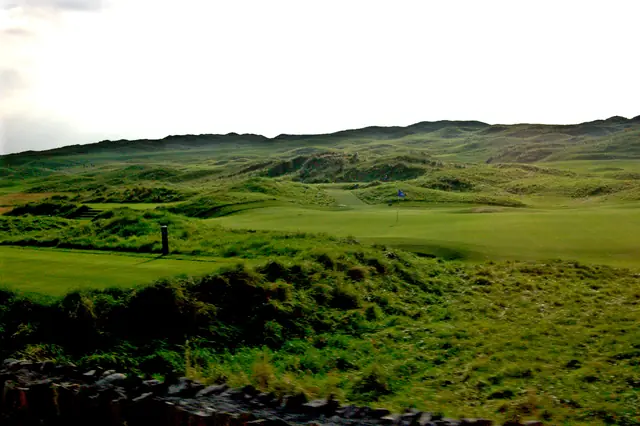

The story behind the championship
The Walker Cup and Curtis Cup offer a different route into golf history from the professional majors. Both put the United States against Great Britain and Ireland, both rely on match play, and both have taken leading amateurs to some of the finest courses on these islands. Their histories meet at places such as St Andrews and Muirfield, yet they should not be treated as interchangeable competitions. The Walker Cup is the men's match, first contested in 1922; the Curtis Cup is the women's, beginning in 1932. Each has its own trophy, patterns of selection, memorable teams and long struggle against American strength.
Following their British and Irish venues makes a rewarding journey through links and inland golf. It also brings future professional stars into view before their names became familiar on major-championship scoreboards. The complete results below retain every played edition and explain interruptions separately. Neither event is an annual championship, so a normal year between matches is not labelled a cancellation.
A trophy intended to cross the Atlantic
The Walker Cup began at the National Golf Links of America in New York on 28–29 August 1922. George Herbert Walker, the USGA president who donated the International Challenge Trophy, supplied the name that stuck. The United States won 8–4 with a side including Bobby Jones and Francis Ouimet. Its British and Irish opponents then welcomed the return match to St Andrews in 1923, where the Americans won 6–5. Another match followed in 1924; the regular two-year pattern developed after that unusually busy opening sequence.
The setting matters. An international team competition was being created after the First World War, linking governing bodies as well as golfers. The R&A describes friendly sporting contact and the promotion of the game on both sides of the Atlantic as central purposes. That ambition gives the match an identity beyond the simple question of which team holds the trophy. A player may turn professional afterwards, but the Walker Cup itself belongs to amateur golf and its institutions.
Source: The R&A's Walker Cup introduction.
St Andrews as the recurring home ground
The Old Course is the clearest geographical thread in the Walker Cup story. It staged matches in 1923, 1926, 1934, 1938, 1947, 1955, 1971, 1975 and 2023. Nine visits make it the most frequently used host. They were not evenly spaced: after 1975 there was almost half a century before the competition returned. A list of dates therefore tells two stories, one of early familiarity and another of a much later reunion.
The 1938 match brought Great Britain and Ireland's first victory, 7–4, before the war created a long break. In 1971 the hosts won again, 13–11. The United States reclaimed control on the next Old Course visit in 1975 and won the 2023 encounter 14½–11½. For anyone visiting St Andrews, the course's amateur international history sits beside its Open record. A famous stretch of turf may have witnessed several kinds of championship, involving different generations and very different stakes.
A British and Irish circuit beyond the Old Course
Other Walker Cup hosts widen the map considerably. Royal St George's received the teams in 1930 and 1967; Birkdale in 1951; Muirfield in 1959 and 1979; and Turnberry in 1963. These are familiar names to followers of The Open, but the amateur matches add an additional layer to their identities. At Muirfield, for example, the same club appears in Ryder, Walker and Curtis Cup history.
The later circuit included Royal Liverpool in 1983 and 2019, Sunningdale in 1987, Portmarnock in 1991, Royal Porthcawl in 1995, Nairn in 1999, Ganton in 2003, Royal County Down in 2007, Royal Aberdeen in 2011 and Royal Lytham & St Annes in 2015. These were individual staging decisions, rather than a fixed rota promising a return on a particular schedule. A past host deserves attention for what happened there without being presented as a guaranteed future venue.
For trip planning, the variety is useful. Portmarnock and Royal County Down lead into Irish coastal journeys; Sunningdale and Ganton bring inland golf into the picture; Nairn and Royal Aberdeen extend a Scottish itinerary beyond the most familiar Open destinations. The venue guides explain current access and accommodation separately from the historical match records.
From rare British and Irish wins to Lahinch in 2026
The overall Walker Cup record remains heavily American. Through the 2026 match, the United States had 40 victories, Great Britain and Ireland ten, with one tie. The drawn match was at Baltimore in 1965. It should remain a tie in the results table even though the defending United States retained the trophy. Trophy retention and winning a particular edition are different facts.
British and Irish wins became more frequent in the later decades, including Royal Porthcawl in 1995, Nairn in 1999, Ocean Forest in 2001, Ganton in 2003, Royal Aberdeen in 2011 and Lytham in 2015. Ocean Forest was an away success, underlining how difficult a transatlantic visit can be. The next British and Irish victory arrived at Lahinch in 2026, after the Americans had won at Cypress Point in 2025. Those consecutive years were deliberate: the competition shifted back to even-numbered years.
At Lahinch, Josh Hill won the final singles match against Tyler Watts to complete a 13½–12½ home victory. The result ended an eleven-year wait and gave the Irish links a new defining episode. It also demonstrates why the latest edition must be checked rather than assuming that the customary two-year rhythm still applies.
A separate beginning for the Curtis Cup
The Curtis Cup takes its name from the American golfing sisters Harriot and Margaret Curtis. They supplied the trophy for a women's international match; the first official contest took place at Wentworth in 1932. The United States won 5½–3½. Gleneagles staged the third edition in 1936, ending in a 4½–4½ tie, while Royal Birkdale received the first post-war British match in 1948. The competition therefore developed its own substantial history rather than merely copying the men's series a decade late.
The early British breakthrough came at Muirfield in 1952, with a 5–4 victory. Another 5–4 home win followed at Prince's in 1956. Those narrow results are reminders that the early contest had just nine points available. Comparing their margins directly with a modern twenty-point match would hide a major change in scale. The early team labels also need care: contemporary names and the archive's modern shorthand do not always line up neatly, particularly in descriptions of Irish participation.
How the women's match changed shape
The Curtis Cup originally combined foursomes and singles. In 1964 the programme expanded to two days and eighteen points. A further change in 2008 introduced the present three-day structure and four-ball play, bringing the total to twenty points. Eight players form each team. The first two days each contain three foursomes and three four-ball matches; the final day brings eight singles.
Those arrangements affect both the records and the spectator's view. A five-win individual performance could not be achieved under every previous format. A player's match total must therefore be read alongside the year in which it was made. Equally, a visitor watching a modern opening day is seeing combinations and selection decisions that are different from the compressed early programme. The event kept its international amateur purpose while changing the way that purpose is expressed on the course.
Stacy Lewis won all five of her matches at St Andrews in 2008. Bronte Law matched that perfect return at Dun Laoghaire in 2016, as did Kristen Gillman at Quaker Ridge in 2018. Farah O'Keefe became the fourth player to achieve it at Bel-Air in 2026. These examples connect changes in the schedule with exceptional sporting performances, rather than presenting a record without its necessary context.
Home victories and near misses
British and Irish Curtis Cup triumphs have provided distinct landmarks. Royal St George's hosted a home win in 1988, Royal Liverpool in 1992, Killarney in 1996, Nairn in 2012, Dun Laoghaire in 2016 and Sunningdale in 2024. The first British and Irish victory on American soil came at Prairie Dunes in 1986. A tie at the Honors Course in 1994 allowed the visiting holders to retain the trophy, but belongs in the drawn column rather than the list of outright away wins.
The match at Sunningdale finished 10½–9½. Catriona Matthew's side had led 7–5 before the singles and survived an American challenge to recover the trophy for the first time since 2016. Mimi Rhodes secured an important half-point after fighting back from three down. Two years later the United States won 13–7 at Bel-Air, taking its overall record to 32 wins against nine British and Irish victories and three ties.
Reading those results by venue suggests an appealing way to explore the event. The English heathland of Sunningdale, the Irish setting at Dun Laoghaire and the Scottish links at Nairn have each supplied a different sort of home occasion. None needs to be described as a lesser version of a professional tournament.
Players before their professional careers
Royal Porthcawl's 1995 Walker Cup included Tiger Woods for the United States and Pádraig Harrington for Great Britain and Ireland. The future major champions were part of a wider amateur contest, and their later fame should not displace teammates who helped decide the result. Gary Wolstenholme's singles win over Woods remains one of that week's notable episodes, while the home team won the match 14–10.
At Dun Laoghaire in 2016, Bronte Law's five wins contributed to an 11½–8½ Curtis Cup victory. These examples show two different routes into the competitions' appeal: recognising an emerging player and appreciating an amateur achievement in its own right. A future professional title may add another connection, but it is not required to make the original match worth remembering.
Reading the complete results accurately
The tables keep the original recorded Walker Cup scores from the official archive. Before 1971, halved games were not always included as half-points in the aggregate in the way modern readers expect. A historical total can therefore look unusual without being an arithmetic mistake. Retrofitting modern scoring would create a second, different table, so it is better to explain the convention and preserve the organiser's record.
The war interruptions are shown explicitly. For the Walker Cup, the sequence stops after 1938 and resumes in 1947; for the Curtis Cup, play resumes in 1948. The Curtis Cup planned for 2020 was postponed to 2021 because of the COVID-19 pandemic. Ordinary alternate years are left out, since they were never scheduled editions. The dates of later matches should not be backdated to the year originally intended.
Two discrepancies deserve a footnote: the independent Walker Cup summary prints 9–1 for 1932 and 14–10 for 2021, whereas The R&A gives 8–1 and 14–12. This table follows the official figures. That is more useful than silently selecting whichever number appears most often in search results.
Visit the amateur game's historic courses
Choose a geographical thread rather than trying to fit the whole Atlantic story into one holiday. St Andrews connects the two competitions directly; an Irish journey can link Portmarnock, Lahinch and Dun Laoghaire; an English trip can combine Sunningdale with Wentworth's early Curtis Cup history. Match attendance, visitor golf and a simple course visit are separate arrangements, so consult the current venue information before travelling.
Use the relevant venue guide, event calendar and accommodation page to build the practical part of the trip. The history explains the significance of the ground; the present-day guides explain how to make a comfortable visit. A stay near a former host can be worthwhile even when neither cup is being played there, provided access is arranged on the club's actual visitor terms.
Walker Cup results
| Year | Venue or reason not held | Winner or tie | Score | Sources |
|---|---|---|---|---|
| 1922 | National Golf Links of America, Southampton, N.Y | USA | 8–4 | Official · Cross-check |
| 1923 | St. Andrews, Scotland | USA | 6–5 | Official · Cross-check |
| 1924 | Garden City (N.Y.) G.C | USA | 9–3 | Official · Cross-check |
| 1926 | St. Andrews (Old Course), Scotland | USA | 6–5 | Official · Cross-check |
| 1928 | Chicago G.C., Wheaton, Ill | USA | 11–1 | Official · Cross-check |
| 1930 | Royal St. George's G.C., Sandwich, England | USA | 10–2 | Official · Cross-check |
| 1932 | The Country Club, Brookline, Mass | USA | 8–1 | Official · Cross-check |
| 1934 | St. Andrews, Scotland | USA | 9–2 | Official · Cross-check |
| 1936 | Pine Valley G.C., Clementon, N.J | USA | 9–0 | Official · Cross-check |
| 1938 | St. Andrews (Old Course), Scotland | GB&I | 7–4 | Official · Cross-check |
| 1940 | Second World War and its aftermath | Not held | — | Official · Cross-check |
| 1942 | Second World War and its aftermath | Not held | — | Official · Cross-check |
| 1944 | Second World War and its aftermath | Not held | — | Official · Cross-check |
| 1946 | Second World War and its aftermath | Not held | — | Official · Cross-check |
| 1947 | St. Andrews (Old Course), Scotland | USA | 8–4 | Official · Cross-check |
| 1949 | Winged Foot G.C., Mamaroneck, N.Y | USA | 10–2 | Official · Cross-check |
| 1951 | Birkdale G.C., Southport, England | USA | 6–3 | Official · Cross-check |
| 1953 | Kittansett Club, Marion, Mass | USA | 9–3 | Official · Cross-check |
| 1955 | St. Andrews (Old Course), Scotland | USA | 10–2 | Official · Cross-check |
| 1957 | The Minikahda Club, Minneapolis, Minn | USA | 8–3 | Official · Cross-check |
| 1959 | Honourable Company of Edinburgh Golfers, Muirfield, Scotland | USA | 9–3 | Official · Cross-check |
| 1961 | Seattle (Wash.) G.C | USA | 11–1 | Official · Cross-check |
| 1963 | Ailsa Course, Turnberry, Scotland | USA | 12–8 | Official · Cross-check |
| 1965 | Baltimore (Md.) C.C. (Five Farms Old Course) | Tied | 11–11 | Official · Cross-check |
| 1967 | Royal St. George’s G.C., Sandwich, England | USA | 13–7 | Official · Cross-check |
| 1969 | Milwaukee (Wis.) C.C | USA | 10–8 | Official · Cross-check |
| 1971 | St. Andrews (Old Course), Scotland | GB&I | 13–11 | Official · Cross-check |
| 1973 | The Country Club, Brookline, Mass | USA | 14–10 | Official · Cross-check |
| 1975 | St. Andrews (Old Course), Scotland | USA | 15½–8½ | Official · Cross-check |
| 1977 | Shinnecock Hills G.C., Southampton, N.Y | USA | 16–8 | Official · Cross-check |
| 1979 | Honourable Company of Edinburgh Golfers, Muirfield, Scotland | USA | 15½–8½ | Official · Cross-check |
| 1981 | Cypress Point Club, Pebble Beach, Calif | USA | 15–9 | Official · Cross-check |
| 1983 | Royal Liverpool G.C., Hoylake, England | USA | 13½–10½ | Official · Cross-check |
| 1985 | Pine Valley (N.J.) G.C | USA | 13–11 | Official · Cross-check |
| 1987 | Sunningdale G.C., Berkshire, England | USA | 16½–7½ | Official · Cross-check |
| 1989 | Peachtree G.C., Atlanta, Ga | GB&I | 12½–11½ | Official · Cross-check |
| 1991 | Portmarnock G.C., Dublin, Ireland | USA | 14–10 | Official · Cross-check |
| 1993 | Interlachen C.C., Edina, Minn | USA | 19–5 | Official · Cross-check |
| 1995 | Royal Porthcawl G.C., Porthcawl, Wales | GB&I | 14–10 | Official · Cross-check |
| 1997 | Quaker Ridge G.C., Scarsdale, N.Y | USA | 18–6 | Official · Cross-check |
| 1999 | Nairn G.C., Nairn, Scotland | GB&I | 15–9 | Official · Cross-check |
| 2001 | Ocean Forest G.C., Sea Island, Ga | GB&I | 15–9 | Official · Cross-check |
| 2003 | Ganton G.C., Ganton, England | GB&I | 12½–11½ | Official · Cross-check |
| 2005 | Chicago G.C., Wheaton, Ill | USA | 12½–11½ | Official · Cross-check |
| 2007 | Royal County Down, Newcastle, Northern Ireland | USA | 12½–11½ | Official · Cross-check |
| 2009 | Merion G.C., Ardmore, Pa | USA | 16½–9½ | Official · Cross-check |
| 2011 | Royal Aberdeen G.C., Aberdeen, Scotland | GB&I | 14–12 | Official · Cross-check |
| 2013 | National Golf Links of America, Southampton, N.Y | USA | 17–9 | Official · Cross-check |
| 2015 | Royal Lytham & St Annes G.C., Lancashire, England | GB&I | 16½–9½ | Official · Cross-check |
| 2017 | Los Angeles C.C. (North Course), Los Angeles, Calif | USA | 19–7 | Official · Cross-check |
| 2019 | Royal Liverpool G.C., Hoylake, England | USA | 15½–10½ | Official · Cross-check |
| 2021 | Seminole G.C., Juno Beach, Fla | USA | 14–12 | Official · Cross-check |
| 2023 | The Old Course, St Andrews | USA | 14.5–11.5 | Official · Cross-check |
| 2025 | Cypress Point, California | USA | 17–9 | Official · Cross-check |
| 2026 | Lahinch, Ireland | GB&I | 13.5–12.5 | Official · Cross-check |
Curtis Cup results
| Year | Venue or reason not held | Winner or tie | Score | Sources |
|---|---|---|---|---|
| 1932 | Wentworth, England | USA | 5½–3½ | Official · Cross-check |
| 1934 | Chevy Chase Club, Maryland | USA | 6½–2½ | Official · Cross-check |
| 1936 | King’s Course, Gleneagles, Scotland | Tied | 4½–4½ | Official · Cross-check |
| 1938 | Essex County Club, Manchester, Massachusetts | USA | 5½–3½ | Official · Cross-check |
| 1940 | Second World War and its aftermath | Not held | — | Official · Cross-check |
| 1942 | Second World War and its aftermath | Not held | — | Official · Cross-check |
| 1944 | Second World War and its aftermath | Not held | — | Official · Cross-check |
| 1946 | Second World War and its aftermath | Not held | — | Official · Cross-check |
| 1948 | Royal Birkdale, England | USA | 6½–2½ | Official · Cross-check |
| 1950 | Country Club of Buffalo, New York | USA | 7½–1½ | Official · Cross-check |
| 1952 | Muirfield, Scotland | GB&I | 5–4 | Official · Cross-check |
| 1954 | Merion, Pennsylvania | USA | 6–3 | Official · Cross-check |
| 1956 | Prince’s, Kent, England | GB&I | 5–4 | Official · Cross-check |
| 1958 | Brae Burn Country Club, Massachusetts | Tied | 4½–4½ | Official · Cross-check |
| 1960 | Lindrick, England | USA | 6½–2½ | Official · Cross-check |
| 1962 | Broadmoor, Colorado | USA | 8–1 | Official · Cross-check |
| 1964 | Royal Porthcawl, Wales | USA | 10½–7½ | Official · Cross-check |
| 1966 | The Homestead, Virginia | USA | 13–5 | Official · Cross-check |
| 1968 | Royal County Down, Northern Ireland | USA | 10½–7½ | Official · Cross-check |
| 1970 | Brae Burn Country Club, Massachusetts | USA | 11½–6½ | Official · Cross-check |
| 1972 | Western Gailes, Scotland | USA | 10–8 | Official · Cross-check |
| 1974 | San Francisco, California | USA | 13–5 | Official · Cross-check |
| 1976 | Royal Lytham & St Annes, England | USA | 11½–6½ | Official · Cross-check |
| 1978 | The Apawamis Club, New York | USA | 12–6 | Official · Cross-check |
| 1980 | St. Pierre, Wales | USA | 13–5 | Official · Cross-check |
| 1982 | Denver Country Club, Colorado | USA | 14½–3½ | Official · Cross-check |
| 1984 | Muirfield, Scotland | USA | 9½–8½ | Official · Cross-check |
| 1986 | Prairie Dunes Country Club, Kansas | GB&I | 13–5 | Official · Cross-check |
| 1988 | Royal St George’s, England | GB&I | 11–7 | Official · Cross-check |
| 1990 | Somerset Hills Country Club, New Jersey | USA | 14–4 | Official · Cross-check |
| 1992 | Royal Liverpool, England | GB&I | 10–8 | Official · Cross-check |
| 1994 | Honors Course, Tennessee | Tied | 9–9 | Official · Cross-check |
| 1996 | Killarney, Ireland | GB&I | 11½–6½ | Official · Cross-check |
| 1998 | The Minikahda Club, Minnesota | USA | 10–8 | Official · Cross-check |
| 2000 | Ganton, England | USA | 10–8 | Official · Cross-check |
| 2002 | Fox Chapel G.C., Pittsburgh, Pa | USA | 11–7 | Official · Cross-check |
| 2004 | Formby G.C., Merseyside, England | USA | 10–8 | Official · Cross-check |
| 2006 | Bandon Dunes G.R. (Pacific Dunes Course), Bandon, Ore | USA | 11½–6½ | Official · Cross-check |
| 2008 | Old Course at St. Andrews, Scotland | USA | 13–7 | Official · Cross-check |
| 2010 | Essex County Club, Manchester-by-the-Sea, Mass | USA | 12½–7½ | Official · Cross-check |
| 2012 | The Nairn Golf Club, Nairn, Scotland | GB&I | 10½–9½ | Official · Cross-check |
| 2014 | St. Louis (Mo.) C.C | USA | 13–7 | Official · Cross-check |
| 2016 | Dun Laoghaire G.C., Dublin, Ireland | GB&I | 11½–8½ | Official · Cross-check |
| 2018 | Quaker Ridge G.C., Scarsdale, N.Y | USA | 17–3 | Official · Cross-check |
| 2020 | COVID-19 pandemic; postponed to 2021 | Not held | — | Official |
| 2021 | Conwy G.C., Conwy, Wales | USA | 12½–7½ | Official · Cross-check |
| 2022 | Merion G.C., Ardmore, Pa | USA | 15½–4½ | Official · Cross-check |
| 2024 | Sunningdale, Golf Club, England | GB&I | 10½–9½ | Official · Cross-check |
| 2026 | Bel-Air Country Club, Los Angeles, Ca | USA | 13–7 | Official · Cross-check |
Notes on the team-match scores
- Walker Cup 1932: The R&A gives USA 8–1; the independent Walker Cup summary prints 9–1. The official score is used.
- Walker Cup 2021: the official score is USA 14–12, rather than the independent summary’s 14–10.
- Curtis Cup 1964: the official result and Golf Compendium give USA 10½–7½; Where2Golf’s summary prints 10½–1½.
- Curtis Cup 1996: the organiser and the secondary detail give 11½–6½; a secondary summary’s 11.6 is a typographical error.
- The 2006 Curtis Cup was at Pacific Dunes within Bandon Dunes Resort. The official course name is retained where a secondary card labels the wider resort differently.
Sources and useful official links
- Confirmed: The R&A's Walker Cup introduction
- Confirmed: R&A Walker Cup rosters
- Reported: independent match archive
- Confirmed: R&A current championship record
- Confirmed: USGA's 2026 report
- Confirmed: RTÉ's independent report
- Confirmed: R&A Curtis Cup history
- Confirmed: R&A's 2024 match record
- Confirmed: USGA Curtis Cup records
- Confirmed: R&A's 2026 report
- Confirmed: 2026 championship summary
- Reported: independent complete scores
- Confirmed: USGA on Law's perfect week
- Reported: independent 1995 record
Useful reading for your visit
Visit today
Some links earn us a small commission at no extra cost to you. Affiliate disclosure.