The hole features below are checked against The R&A’s 2022 course guide; 2027 spectator routes and grandstand positions must come from the championship map when published.
Choose a viewing style before choosing a hole
Our recommendation for a first visit is to watch a sequence of groups from one legal viewing position, follow a selected group for a manageable stretch and reserve some energy for the finish. Constantly chasing the most famous player often produces more walking than golf. A position from which you can see the ball land and the next stroke is usually more satisfying than a packed spot with a distant glimpse of a recognisable face.
The landmarks are permanent features, while spectator access is an event operation. A green being shared by two holes does not mean spectators can cross it or move directly between both flags. Read the 2027 map and obey marshals at crossing points. Photography, personal space and quiet movement matter as much at a less famous hole as at the final green. Choose an alternative whenever the first location is full.
1 — Burn
The opening hole introduces the Swilcan Burn and a fairway shared with the 18th. For spectators, it is a good place to understand the rhythm of a group starting its round: introductions, initial nerves and the approach over the burn. Watch where players leave their first shot before judging how straightforward their next stroke looks.
If the tee area is busy, consider an authorised view nearer the approach instead of waiting behind several rows of people. Avoid standing somewhere that depends on leaning into a walkway when the ball is struck. Decide whether you want to watch several starts or follow one group; switching between both at the last moment can put you behind the crowd all morning.

2 — Dyke
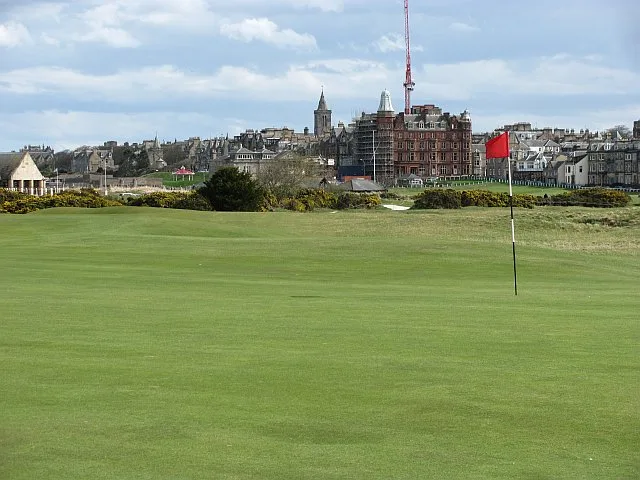
The second introduces a double green, shared with the 16th. A spectator can use it to notice how the same broad putting surface contains very different tasks depending on the flag being played. Look for the receiving area of the approach rather than assuming that every ball on a huge green is close to the hole.
This is a useful early settling stop if you want to watch a few groups without committing to the famous finish immediately. Find your permitted position before the players prepare to hit. If you move on, allow the next stroke to finish first. A patient pause commonly gives you a better opportunity to cross than hurrying into a marshal's closed rope line.
3 — Cartgate (Out)
Cartgate bunker guards this approach. Watch the angle from which a player attacks the green: the interesting part is often the route chosen to avoid trouble, not simply whether the shot finishes on the putting surface. From a suitable authorised position, give yourself time to see more than one solution.
For a mixed group, explain what the bunker changes before the next shot, then stay quiet during preparation. Spectating becomes more engaging when everybody knows what to look for. If you cannot see the landing area from your spot, do not assume that the loudest reaction tells the whole story; use an official scoreboard or the app when convenient.
4 — Ginger Beer
Ginger Beer provides another chance to compare the line of a drive with the approach it leaves. The R&A's guide describes mounding and bunkers around the challenge. Pay attention to the lie and the player's stance; links golf can make a seemingly safe position awkward.
After watching the opening holes, this is a sensible moment to assess the group's energy. There is little benefit in marching onwards because an eighteen-hole walk sounded attractive at breakfast. If you stop here for several groups, identify the next permitted path and a later meeting point first. Keeping your day adaptable is more useful than completing an imagined route irrespective of crowds or weather.
5 — Hole O’Cross (Out)
The first par five brings the Spectacles bunkers into the story. Watch how players weigh advancing the ball against leaving a controllable next shot. A long approach that stops safely can be more valuable than an ambitious effort that creates a difficult recovery; seeing successive groups makes those choices easier to appreciate.
A par five can provide a richer sequence than a brief view of a tee shot. If you have found a comfortable permitted spot, stay for a while instead of moving immediately after one famous player. Keep backpacks close, and take a seated rest only where the event rules and pedestrian space allow it.
6 — Heathery (Out)
The Coffin bunkers are among the hazards associated with this part of the course. Look at the target the player can actually see from the lie, then compare it with the view available to you. A spectator can sometimes see an outcome that the player must judge through experience and a yardage book.
Use quieter moments between groups to put on a waterproof or find a snack. Rustling a bag while someone addresses the ball is avoidable with a little anticipation. If somebody in your party has lost interest, make the next planned break sooner. Enjoying six holes together is better than forcing a tired companion through a long walk.
7 — High (Out)
The Shell bunker is the landmark to recognise here. Its size makes the hole a useful lesson in why the most direct route is not always the most attractive. Notice where a player aims in relation to the danger and how the wind changes the apparent choice.
Before moving towards the turn, consult your map rather than following other spectators automatically. People ahead may be heading for a facility or a different hole. A pause to establish your route saves unnecessary backtracking. If a marshal holds a crossing, remain behind the rope and take the opportunity to watch the next shot from where you are.
8 — Short
The eighth is a par three. A single-shot hole offers a clear sequence for a newcomer: club selection, flight, landing and the resulting putt. Choose an authorised place with a view of the putting surface if you can, since the result can be less obvious from the tee end.
This can suit spectators who prefer to remain in one place for several groups. Allow for the weather while stationary; a cool wind feels different when you have stopped walking. Keep hats and loose clothing secure, and move away from the viewing line if you need to reorganise a bag or help a child with a coat.
9 — End
The ninth is a short par four in the traditional course description. The interest lies in the decision from the tee and the putting that follows. Watch how an aggressive plan changes when the wind turns or the ground plays differently; the same hole can offer very different viewing over the course of a day.
For your own programme, the turn can be a decision point rather than a requirement to continue following a group. If you have already seen plenty of golf, take a proper break. Check the scoreboard before choosing the next stop so that your movement has a purpose beyond hoping to stumble upon the leaders.
10 — Bobby Jones
Bobby Jones runs in the opposite direction to the ninth. That change is a useful prompt to consider the wind, even when the visible distance looks manageable. Watch the flight and the first bounce, then see what kind of putt remains. Links golf rewards attention to the ground after the ball lands.
If your group splits here, agree the reunion time and location before separating. 'At the next green' is a poor instruction on a course with shared surfaces and controlled walkways. A clearly named public facility or mapped meeting point is easier to find and avoids anyone trying to make a forbidden shortcut across the playing area.
11 — High (In)
The second par three is associated with the Hill and Strath bunkers. It is an appealing stop for watching recovery play as well as approaches. A missed green can demand imagination, and a patient spectator sees more of that story than somebody who walks on as soon as the ball disappears.
A shorter hole can still take time to pass when crossings are controlled. Build that into your exit plan. Do not assume you can leave a viewing area at precisely the moment you choose, particularly if the next group has reached its shot. Stay attentive to marshals and allow the golf to finish before moving through a busy gap.
12 — Heathery (In)
The twelfth brings hidden bunkers into the tee-shot calculation. For spectators, it is a reminder that a beautiful camera angle may reveal little about the actual difficulty. Look at the player's preparation and club choice, then watch the next stroke to understand the consequence.
If you want photographs, take them only in accordance with the current championship policy. Keep your device silent and avoid lifting it into somebody else's sightline. A few thoughtful pictures between shots will usually mean more afterwards than a long series captured while missing the golf itself. Pack the phone away when it distracts from following play.
13 — Hole O’Cross (In)
The thirteenth begins the inward stretch towards town and shares the enormous green used by the fifth. Follow the correct flag when judging an approach. The scale can make a ball appear safely home when a substantial putt still remains.
This is a useful place to reassess how much time you want at the closing holes. If you hope to settle near a famous finish, move before your last possible opportunity rather than joining a late rush. Leave space for food, toilets and the permitted walking route. A comfortable final hour is easier to arrange when you have not used every minute chasing groups.
14 — Long
Hell bunker and the Beardies are the names to recognise on the second par five. Watch the way a player breaks the hole into stages, particularly when the ambitious route creates a difficult escape. Seeing somebody decide to play away from the green can make the strategy more understandable than watching highlights alone.
Find a view that lets you follow at least one part of that sequence properly. You do not need to see every hazard simultaneously to enjoy the hole. If the crowd is deep, move to an available permitted area rather than balancing on a slope or blocking a thoroughfare to preserve a marginally better view.
15 — Cartgate (In)
The fifteenth shares its green with the third. It rewards spectators who look beyond the final result of the approach and study the putt that follows. A large green gives players more room to land, while leaving considerable work once the ball stops.
By this stage, tiredness may affect your own decisions. Take a short pause before joining a queue for another viewing position. If someone needs to leave, arrange their route calmly and share tickets or travel information as appropriate. The last holes are more enjoyable when the group has agreed whether everyone is staying together through the finish.
16 — Corner of the Dyke
The Principal's Nose bunkers are the recognisable feature in the sixteenth's tee-shot choices. Look for the relationship between the drive and the angle into the green. The interesting play may be a conservative decision that prevents a costly mistake rather than a spectacular recovery.
As attention shifts to the final two holes, crowd movement can become a distraction. Keep watching if you have a good position; there is no obligation to join every flow towards the seventeenth. If you do move, use the designated route and expect crossings to slow progress. Treat the walk as part of your viewing plan, not an inconvenience to push through.
17 — Road
The Road Hole brings the hotel, the Road Hole bunker and the road-side boundary into the visual drama. Watch an approach and the response it leaves around the green. The famous setting can be busy, so value a clear permitted sightline over being physically closest to the name on your wish list.
For a grandstand, follow the admission and queue rules published for 2027. Once you find a seat, consider staying for several groups: continually changing positions can sacrifice both the view you already have and time you could spend watching.
18 — Tom Morris
The Swilcan Bridge and Valley of Sin make the final hole instantly recognisable. Watch the approach's first bounce and the way the ball gathers near the green. The broad setting does not make the final putt routine, particularly when the championship is on the line.
Choose between the closing atmosphere and an earlier, calmer departure before the final groups arrive. Neither choice needs to be apologetic: a train connection or a child's energy can matter more than a last photograph. If staying, allow time afterwards for the spectator exit and transport queue. Do not turn a memorable finish into a sprint for a service you were unlikely to reach.
Turn the viewing plan into a comfortable trip
Book enough nights to make your chosen golf day manageable. Our St Andrews stay advice helps compare a walkable room with a transfer from another base. Read the Old Course venue guide for the broader setting and practice-day guide if exploring the course matters more to you than the final leaderboard.
Keep the Open hub alongside this viewing plan for official admission and arrival updates. The most successful course day is usually selective: a handful of holes you understand, enough breaks to remain comfortable and a sleeping base you can reach without turning the entire evening into another endurance test.
Find accommodation for your visit
Some links earn us a small commission at no extra cost to you. Affiliate disclosure.
Sources and useful official links
Useful reading for your visit
You might also like
The Open 2027 St Andrews: Tickets & Hotels
Plan your St Andrews visit with ticket advice, travel options and places to stay.

St Andrews Old Course visitor guide
Stay in St Andrews for the simplest Old Course trip, or choose Dundee for a city base with a separately planned transfer. The course is beside the town, but championship entrances and public access change during events.
The Open 2027 St Andrews: Tickets & Hotels, Alfred Dunhill Links Championship 2027
St Andrews Accommodation: The Open 2027
Our suggestion: stay in St Andrews for the simplest evenings and least complicated local journey, or compare Dundee and nearby Fife towns if you can organise the daily transfer. Choose the journey to the spectator entrance before choosing the room.