

The story behind the championship
The putt did not fall immediately. Seve Ballesteros' ball reached the edge of the hole on St Andrews' 18th green, hesitated and dropped. He punched the air, then embraced his caddie, Nick de Paul. The celebration became one of golf's defining images, but the 1984 Open was not yet mathematically finished: Tom Watson was still behind him on the course.
Ballesteros had completed 276 strokes. Watson's difficulty at the Road Hole, followed by a par at the last, left him tied for second with Bernhard Langer on 278. The official margin was two strokes. To understand the fist pump fully, it helps to follow the back nine that preceded it, the different groups in which the contenders were playing and the last chance that remained after Seve's ball went in. Official championship account.
Watson pursues two records
Watson had already won five Opens: Carnoustie in 1975, Turnberry in 1977, Muirfield in 1980, Royal Troon in 1982 and Royal Birkdale in 1983. At St Andrews he was pursuing a third successive title and a sixth overall, which would have matched Harry Vardon's championship tally.
That background gives the final day a larger significance than a routine defence. Watson's third-round 66 had put him level with Ian Baker-Finch at the top, with Ballesteros two strokes behind. There was a major record within reach, but there were also immediate opponents capable of winning. The opportunity did not give Watson a privileged route through the Road Hole or a different requirement on the final green. The same course that offered the record could still deny it. Official Watson profile.
Ballesteros arrives with his own championship past
Ballesteros was already an Open winner, having triumphed at Royal Lytham & St Annes in 1979. He had also won the Masters in 1980 and 1983. St Andrews was therefore a chance to add a second Claret Jug to an established major career, not the first moment in which he had proved himself against the world's leading players.
His 1984 scorecard was 69, 68, 70 and 69. Those rounds total 276, 12 under par. One later official career feature gives the opening round as 68, but the edition leaderboard and championship media guide both give 69; the actual results are used here. That small discrepancy matters because a dramatic historical narrative still needs arithmetic that works. The final birdie became famous partly because the tournament remained close enough for a single stroke to make a difference. Official Ballesteros career account; official edition leaderboard.
Two groups and several contenders
Watson and Baker-Finch formed the final pairing. Ballesteros played with Langer in the group ahead. That arrangement is central to the finish: Seve's last hole and Watson's 17th were unfolding at nearly the same time, rather than the two men standing side by side over their final putts.
Baker-Finch's Sunday began badly when he found the Swilcan Burn at the first. As the round developed, Ballesteros and Watson became the principal rivals, with Langer close enough to matter. Seve birdied the fifth and eighth and reached the inward half with a one-stroke advantage. The leaderboard was changing through performances in different groups, making the timing of information part of the contest. A spectator at one hole could see one important shot without seeing the answer being played elsewhere. Official detailed final-round account.
The back nine refuses to settle
Ballesteros reached the driveable 10th green but needed three putts and took par. At the short 11th, another three strokes with the putter contributed to a dropped shot. Watson birdied the 10th and moved back in front. For a player whose final putt would become so celebrated, Seve's inward half had first included repeated frustration on the greens.
The next change came at the 12th. Watson drove into gorse, took a penalty drop and made bogey. Ballesteros had missed a short birdie opportunity of his own, so the pair were level again rather than Seve taking a clear lead. Watson then birdied the 13th, while Ballesteros answered at the 14th. Neither had converted the other's mistake into a lasting advantage. The final holes would be decisive because earlier chances had moved the lead without settling it. Organiser's account of the back-nine exchanges.
The Road Hole creates the opening
Ballesteros had bogeyed the 17th in each of the first three rounds. On Sunday he found a way through it in par, using a fine approach and two putts. That result did not have the visual drama of his last-hole celebration, but it removed a repeated cost from his scorecard at the most useful moment.
Watson's approach finished beyond the green, close to the wall alongside the road. From there he could only get the ball back onto the putting surface and attempt a difficult par save. The hole is important to the story because it changed the demands on the final tee. While Seve was creating a target at the 18th, Watson was about to lose a stroke at the 17th. Two adjacent holes were shaping one championship result. Official anniversary account; official St Andrews course guide.
The birdie and the celebration
Seve's approach at the 18th left a putt of about 12 feet, breaking from right to left. It was not a recovery from a car park or an impossible-looking escape from rough, the kinds of shot often associated with his reputation. It was a measured final birdie putt, made exceptional by the moment in which it was required.
Once it fell, the response was immediate and expansive. The fist pump and the embrace with de Paul gave photographers and spectators an image that outlived the shot itself. The organiser's later anniversary account records how the celebration became a lasting emblem associated with Ballesteros. Describing that legacy does not require reproducing a copyrighted press photograph: the historical significance lies in the documented action and the way it continued to represent him. Official 40th-anniversary feature.
Watson still has a final chance
Watson's bogey at the 17th left him needing an eagle at the last to tie Ballesteros and force a play-off. The requirement was demanding, but it means the championship was not formally won at the instant Seve's birdie dropped. Watson then made par, completing 73 for the day and 278 for the week.
Langer also finished on 278. Recording both runners-up keeps the final result separate from the dramatic story of the two principal rivals. The championship's closing images belong strongly to Seve and Watson, but the leaderboard contains another player tied for second. It is possible to preserve the excitement of the finish without simplifying the results into a head-to-head match that never actually existed. Ballesteros won a 72-hole stroke-play championship by two strokes, with two golfers sharing the next position. Official edition results.
A moment within a wider career
Seve won one more Open, at Royal Lytham & St Annes in 1988. The St Andrews victory sits between his two Lytham titles, yet the gesture on the Old Course became the most immediately recognisable image of his Open career. The location, the last-hole birdie and the visible release of pressure all contributed to that memory.
The distinction between a memorable image and a complete result is useful here. The image condenses the championship into a moment; the history restores the missed putts, the changing lead, the Road Hole and the opponents still playing. Neither diminishes the other. Knowing the sequence makes the celebration more intelligible because it shows how much remained uncertain until the closing holes. It also gives the 17th and 18th their proper, connected roles in the story. Official history of Seve's Open record.
Connect the story with a visit
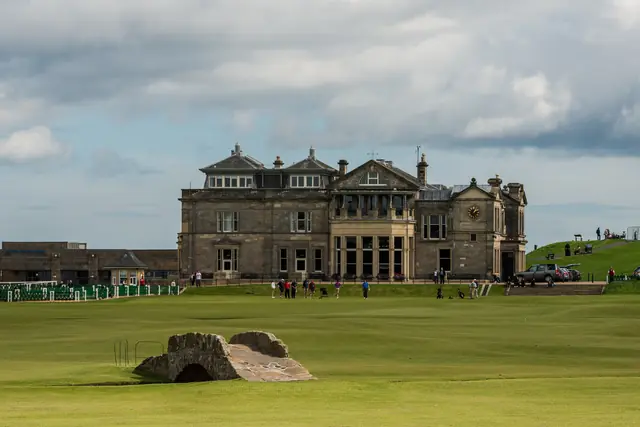
Read the Old Course history and St Andrews venue guide together, then compare accommodation bases in the town and wider Fife. The public setting around the finishing holes helps visitors recognise the scene, but access to the playing course and championship areas depends on current arrangements. Use The Open hub for the next event trip.
Sources and useful official links
- Confirmed: Official edition results
- Confirmed: Official Watson profile
- Confirmed: Official Ballesteros career account
- Confirmed: Organiser's account of the back-nine exchanges
- Confirmed: Official 40th-anniversary feature
- Confirmed: official St Andrews course guide
- Confirmed: Official history of Seve's Open record
Useful reading for your visit
Visit today
- St Andrews Old Course visitor guide
- The Open 2027 at St Andrews
- Where to stay for The Open 2027 at St Andrews
Some links earn us a small commission at no extra cost to you. Affiliate disclosure.